

CompTIA CV0-002日本語 : CompTIA Cloud+ Certification Exam (CV0-002日本語版)

Exam Code: CV0-002-JPN
Exam Name: CompTIA Cloud+ Certification Exam (CV0-002日本語版)
Updated: Jun 02, 2026
Q & A: 330 Questions and Answers
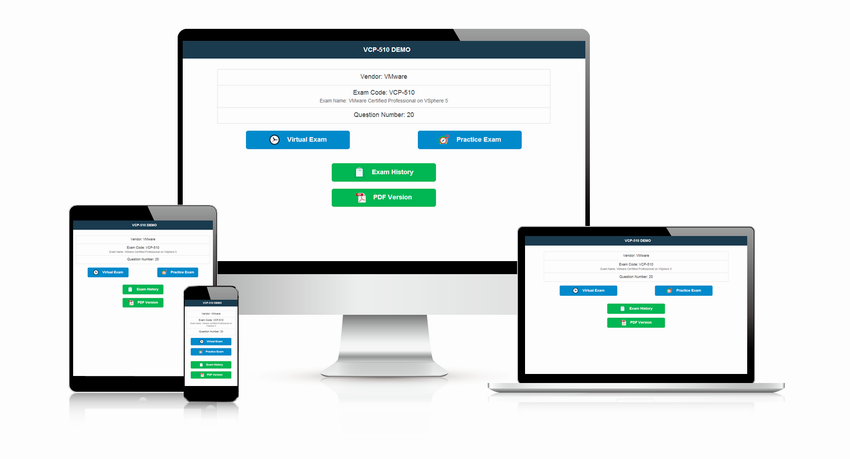
CV0-002日本語 Free Demo download
How to study the CV0-002 Exam
There are two main types of resources for preparation of certification exams first there are the study guides and the books that are detailed and suitable for building knowledge from ground up then there are video tutorial and lectures that can somehow ease the pain of through study and are comparatively less boring for some candidates yet these demand time and concentration from the learner. Smart Candidates who want to build a solid foundation in all exam topics and related technologies usually combine video lectures with study guides to reap the benefits of both but there is one crucial preparation tool as often overlooked by most candidates the practice exams. Practice exams are built to make students comfortable with the real exam environment. Statistics have shown that most students fail not due to that preparation but due to exam anxiety the fear of the unknown. PDFDumps expert team recommends you to prepare some notes on these topics along with it don't forget to practice CompTIA CV0-002 exam dumps which have been written by our expert team, Both these will help you a lot to clear this exam with good marks.
Reference: https://certification.comptia.org/certifications/cloud
Great feedbacks and friendly relationships with customers inspired us to do better
We build friendly relationships with customers after they passed the test by using our CV0-002日本語 interactive practice exam, and they introduce CV0-002日本語 exam training material to the people around them. We have established relations with customers covering so many different countries who aimed to fulfill their ambitions in this area. We also offer benefits and discounts to them in later years and never ignore their demands. We believe you can also remember the points of the CompTIA Cloud+ CV0-002日本語 exam training material and achieved excellent results in the exam with less time and money. Once you received our CV0-002日本語 practice test online, you just need to spend one or two days to practice questions and remember the answers.
Professional CV0-002日本語 exam training material sorted out by experts
This is the most important aspect of our CV0-002日本語 valid questions test. Our company sincerely employed many professional and academic experts from the filed who are diligently keeping eyes on accuracy and efficiency of CompTIA Cloud+ CV0-002日本語 exam training material, which means the study material are truly helpful and useful. The CV0-002日本語 free download pdf includes not only the most important points of the requirements, but the newest changes and updates of test points. So if you purchase our CV0-002日本語 practice test online, just practice them about 2 hours a day regularly and persistently, you can successfully pass the test.
Dear customers, welcome to get to know about our products. The products you are looking through are the best-selling of our company. Most importantly, all of them are helpful study material to your test. Now, let me introduce some features of CompTIA CV0-002日本語 latest exam guide for you clearly:

CompTIA CV0-002 Exam Syllabus Topics:
| Topic | Details |
|---|---|
Configuration and Deployment - 24% | |
| Given a scenario, analyze system requirements to ensure successful system deployment. | 1. Appropriate commands, structure, tools, and automation/orchestration as needed 2. Platforms and applications 3. Interaction of cloud components and services
4. Interaction of non-cloud components and services |
| Given a scenario, execute a provided deployment plan. | 1.Apply the change management process
3. Execute workflow 4. Configure automation and orchestration, where appropriate, for the system being deployed 5.Use commands and tools as needed 6.Document results |
| Given a scenario, analyze system requirements to determine if a given testing plan is appropriate. | 1. Underlying environmental considerations included in the testing plan
|
| Given a scenario, analyze testing results to determine if the testing was successful in relation to given system requirements. | 1. Consider success factor indicators of the testing environment
3.Baseline comparisons 4.SLA comparisons 5.Cloud performance fluctuation variables |
| Given a scenario, analyze sizing, subnetting, and basic routing for a provided deployment of the virtual network. | 1.Cloud deployment models
2.Network components
|
| Given a scenario, analyze CPU and memory sizing for a provided deployment. | 1.Available vs. proposed resources
4.Effect to HA/DR |
| Given a scenario, analyze the appropriate storage type and protection capability for a provided deployment. | 1. Requested IOPS and read/ write throughput 2.Protection capabilities
5.Management differences 6.Provisioning model
9.Overcommitting storage 10. Security configurations for applicable platforms
|
| Given a scenario, analyze characteristics of the workload (storage, network, compute) to ensure a successful migration. | 1.Migration types
2. Source and destination format of the workload
3. Network connections and data transfer methodologies
|
| Given a scenario, apply elements required to extend the infrastructure into a given cloud solution. | 1.Identity management elements
3. Element considerations to deploy infrastructure services such as:
|
Security - 16% | |
| Given a scenario, apply security configurations and compliance controls to meet given cloud infrastructure requirements. | 1.Company security policies 2. Apply security standards for the selected platform 3. Compliance and audit requirements governing the environment
6.Tunneling protocols
8. Appropriate configuration for the applicable platform as it applies to compute
|
| Given a scenario, apply the appropriate ACL to the target objects to meet access requirements according to a security template. | 1. Authorization to objects in the cloud
3. Effect of cloud deployment models on security implementations 4.Access control methods
|
| Given a cloud service model, implement defined security technologies to meet given security requirements. | 1.Data classification 2. Concepts of segmentation and microsegmentation
4. Use multifactor authentication as defined 5. Apply defined audit/ compliance requirements |
| Given a cloud service model, apply the appropriate security automation technique to the target system. | 1. Tools
5. Impact of security automation techniques as they relate to the criticality of systems
|
Maintenance - 18% | |
| Given a cloud service model, determine the appropriate methodology to apply given patches. | 1. Scope of cloud elements to be patched
4.Dependency considerations |
| Given a scenario, apply the appropriate automation tools to update cloud elements. | 1.Types of updates
|
| Given a scenario, apply an appropriate backup or restore method. | 1.Backup types
|
| Given a cloud-based scenario, apply appropriate disaster recovery methods. | 1.DR capabilities of a cloud service provider 2.Other considerations
|
| Given a cloud-based scenario, apply the appropriate steps to ensure business continuity. | 1.Business continuity plan
|
| Given a scenario, apply the appropriate maintenance automation technique to the target objects. | 1. Maintenance schedules 2. Impact and scope of maintenance tasks 3. Impact and scope of maintenance automation techniques 4.Include orchestration as appropriate 5.Maintenance automation tasks
|
Management - 20% | |
| Given a scenario, analyze defined metrics to determine the presence of an abnormality and/or forecast future needed cloud resources. | 1.Monitoring
3.Forecasting resource capacity
4.Policies in support of event collection Policies to communicate alerts appropriately |
| Given a scenario, determine the appropriate allocation of cloud resources. | 1. Resources needed based on cloud deployment models
3.Support agreements
5.Resource balancing techniques 6.Change management
|
| Given a scenario, determine when to provision/deprovision cloud resources. | 1. Usage patterns 2.Cloud bursting
4. Extending cloud scope 5.Application life cycle
|
| Given a scenario, implement account provisioning techniques in a cloud environment to meet security and policy requirements. | 1. Identification 2.Authentication methods
5.Account management policy
|
| Given a scenario, analyze deployment results to confirm they meet the baseline. | 1.Procedures to confirm results
|
| Given a specific environment and related data (e.g., performance, capacity, trends), apply appropriate changes to meet expected criteria. | 1. Analyze performance trends 2.Refer to baselines 3.Refer to SLAs 4.Tuning of cloud target objects
|
| Given SLA requirements, determine the appropriate metrics to report. | 1.Chargeback/showback models
2.Dashboard and reporting
|
Troubleshooting - 22% | |
| Given a scenario, troubleshoot a deployment issue. | 1.Common issues in the deployments
|
| Given a scenario, troubleshoot common capacity issues. | 1. Exceeded cloud capacity boundaries
3.Unplanned expansions |
| Given a scenario, troubleshoot automation/orchestration issues. | 1.Breakdowns in the workflow
|
| Given a scenario, troubleshoot connectivity issues. | 1.Common networking issues
3.Network connectivity tools
|
| Given a scenario, troubleshoot security issues. | 1.Authentication issues
3.Federation and single sign-on issues 4.Certificate expiration 5.Certification misconfiguration 6.External attacks 7.Internal attacks 8.Privilege escalation 9.Internal role change 10.External role change 11.Security device failure 12.Incorrect hardening settings 13.Unencrypted communication 14.Unauthorized physical access 15.Unencrypted data 16.Weak or obsolete security technologies 17. Insufficient security controls and processes 18.Tunneling or encryption issues |
| Given a scenario, explain the troubleshooting methodology. | Always consider corporate policies, procedures and impacts before implementing changes 1.Identify the problem
2. Establish a theory of probable cause (question the obvious)
3. Test the theory to determine cause
|
Safe and easy handled purchase process
The CV0-002日本語 exam is very important for every candidate, so we try our best to be outstanding in every aspect. And the purchase process is one of the aspects. You need to log in our website, input your email address and it will transfer to payment page, and you can deal with it in mode of credit card. We promise you here that all your operations on our website are safe and guaranteed. No risk of revealing your private information. Ordering our CV0-002日本語 exam study material and you can get more favorable discounts.
Instant Download: Our system will send you the CV0-002日本語 braindumps files you purchase in mailbox in a minute after payment. (If not received within 12 hours, please contact us. Note: don't forget to check your spam.)
Who should take the CV0-002 exam
The CompTIA Cloud+ certification is an internationally-recognized validation that identifies persons who earn it as possessing skilled in CompTIA Cloud+. if a candidate wants significant improvement in career growth needs enhanced knowledge, skills, and talents. The CompTIA Cloud+ certification provides proof of this advanced knowledge and skill. If a candidate has knowledge of associated technologies and skills that are required to pass CompTIA CV0-002 Exam then he should take this exam.

No help, Full refund!
PDFDumps confidently stands behind all its offerings by giving Unconditional "No help, Full refund" Guarantee. Since the time our operations started we have never seen people report failure in the CompTIA CV0-002日本語 exam after using our products. With this feedback we can assure you of the benefits that you will get from our products and the high probability of clearing the CompTIA CV0-002日本語 exam.
We still understand the effort, time, and money you will invest in preparing for your certification exam, which makes failure in the CV0-002日本語 exam really painful and disappointing. Although we cannot reduce your pain and disappointment but we can certainly share with you the financial loss.
This means that if due to any reason you are not able to pass theactual CompTIA CV0-002日本語 exam even after using our product, we will reimburse the full amount you spent on our products. you just need to mail us your score report along with your account information to address listed below within 7 days after your unqualified certificate came out.


Over 21593+ Satisfied Customers
 0 Customer ReviewsCustomers Feedback (* Some similar or old comments have been hidden.)
Why Choose PDFDumps

Quality and Value
PDFDumps Practice Exams are written to the highest standards of technical accuracy, using only certified subject matter experts and published authors for development - no all vce.

Tested and Approved
We are committed to the process of vendor and third party approvals. We believe professionals and executives alike deserve the confidence of quality coverage these authorizations provide.

Easy to Pass
If you prepare for the exams using our PDFDumps testing engine, It is easy to succeed for all certifications in the first attempt. You don't have to deal with all dumps or any free torrent / rapidshare all stuff.

Try Before Buy
PDFDumps offers free demo of each product. You can check out the interface, question quality and usability of our practice exams before you decide to buy.
Our Clients












Updated Pdf Study Questions & Free Download Demo is the Reliable Study Material for you to rely on. Free try the Pdf Demo for a pre-test and choose our Exam Study Pdf Torrent for successfully pass. 100% Pass is the guarantee of our Exam Practice Material.
Latest PDF Dumps
- CISA-JPN valid pdf dumpsMay 27, 2022
- CMMC-CCP valid pdf dumpsMay 28, 2022
- Agentforce-Specialist valid pdf dumpsMay 28, 2022
- Education-Cloud-Consultant valid pdf dumpsMay 28, 2022
Contact Us
From Monday to Saturday
Support: Contact now
If you have any question please leave me your email address, we will reply and send email to you in 12 hours.
Copyright © 2026 PDFDumps NETWORK CO.,LIMITED. All Rights Reserved. All trademarks used are properties of their respective owners. Privacy Policy